Sojourn Fine Art
From the conversation
An editorial overview based on the published video description. No published or downloadable transcript was found.
This Sojourn Conversations film follows Stepan Fedorovich Kolesnikov from humble beginnings in the Russian Empire and study at the Imperial Academy of Arts, through favor with Nicholas II and the loss of that position during the Russian Revolution, to exile and a rebuilt legacy in Belgrade. It looks at his realist pictures of rural life, light, labor, and the changing seasons, his warm and cool color relationships, and his influence in the Balkans.
Stepan Fedorovich Kolesnikov was a Russian realist painter favored by Tsar Nicholas II who later rebuilt his legacy in exile in Belgrade.
Born to humble circumstances in the Russian Empire, he studied at the Imperial Academy of Arts and worked under the influence of Ilya Repin. He became a favorite of Nicholas II, lost that position during the Russian Revolution, and continued as a realist in Belgrade while other artists turned toward modernism or Soviet ideology. This ten-minute film is an art-history talk, not a dated exhibition recap. No published or downloadable transcript was found.
Why Kolesnikov still matters
Kolesnikov’s dual legacy—imperial favor, then exile—makes him a useful case for anyone who cares about representational painting that stayed with rural life when the surrounding culture changed. His pictures attend to labor, light, and the seasons, and they treat figures as universal stand-ins rather than as portraits of named sitters. That combination, together with the work he continued in the Balkans, is why Sojourn Fine Art is placing this conversation at the front of the archive.
A biographical and artistic timeline
The film is organized in five chapters. The outline below follows those chapters and stays with what the published description supports.
- 0:00 Introduction – The Dual Legacy of Kolesnikov. The talk opens with the split between his standing in the Russian Empire and the life he rebuilt after losing his position.
- 0:35 From Peasant Roots to Imperial Academy. Kolesnikov rose from humble beginnings and trained at the Imperial Academy of Arts, with Ilya Repin as a decisive influence.
- 2:10 Painting for the Tsar. He became a favorite of Nicholas II, painting from a realist commitment to rural life, light, and labor.
- 4:00 Exile and Reinvention in the Balkans. The Russian Revolution ended that imperial position; he rebuilt his work and reputation in exile in Belgrade.
- 7:45 Artistic Legacy and Influence. The close of the film turns to his lasting influence in the Balkans and to the persistence of his practice, including work continued despite Parkinson’s disease.
Artistic style and technique
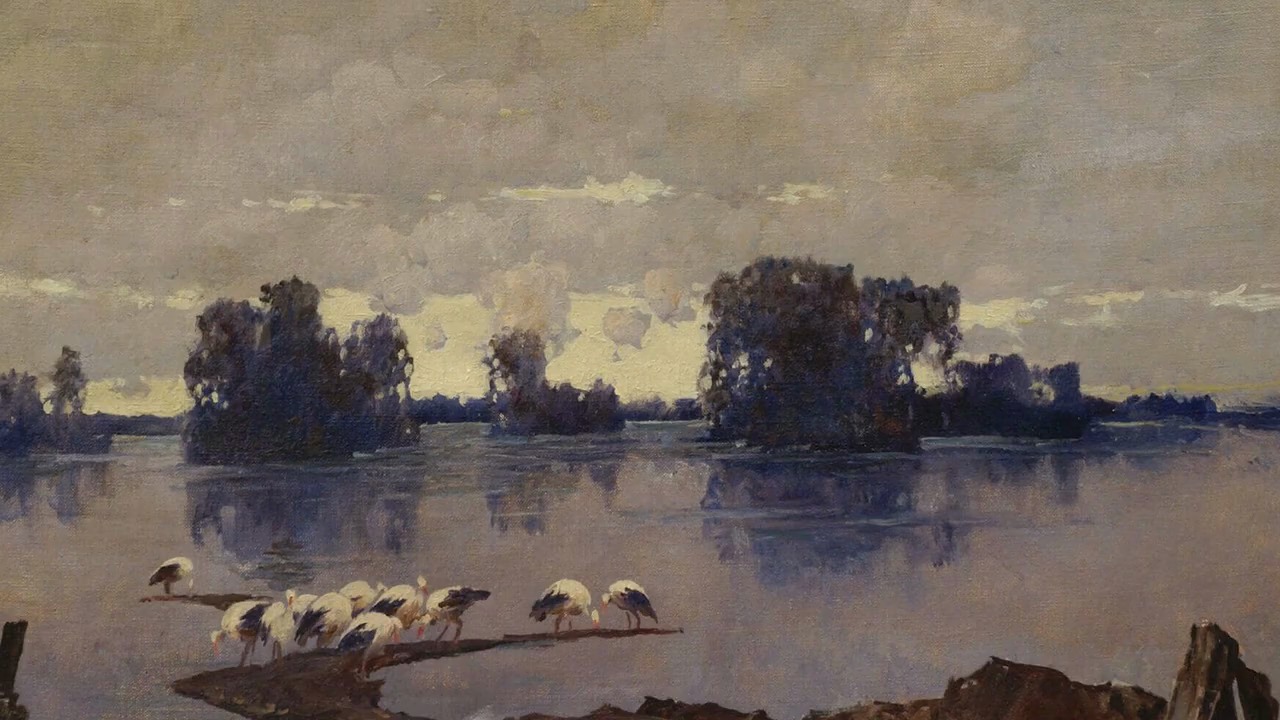
Kolesnikov remained a realist while others moved toward modernism or Soviet ideology. Recurring subjects are rural life, physical labor, changing seasons, and the behavior of light. Color is described through warm and cool relationships rather than through a turn away from observed nature. Figures in his pictures function as universal representations—types of people at work in a landscape—rather than portraits of specific individuals.
Key takeaways
- A peasant-born painter reached the Imperial Academy of Arts and the favor of Nicholas II without abandoning realism.
- The Russian Revolution cost him that position; Belgrade became the place where he reinvented his career.
- Rural labor, seasonal light, and warm/cool color are central to how the film describes his pictures.
- Human figures are treated as universal representations, not as likenesses of named sitters.
- His later influence is located in the Balkans, alongside a practice continued despite Parkinson’s disease.
Legacy
The film’s closing argument is that Kolesnikov’s reputation has to be read in two places at once: the imperial world that first advanced him, and the Balkan exile in which he kept painting and teaching by example. The “forgotten” in the title is not a claim that the work vanished, but that this realist line—rural, seasonal, and unconverted to modernism or Soviet ideology—has been easy to miss beside better-known names. His influence in the Balkans is the part of that story the film asks viewers to take seriously.
Frequently asked questions
- Who was Stepan Fedorovich Kolesnikov?
- Stepan Fedorovich Kolesnikov was a Russian realist painter who rose from humble beginnings in the Russian Empire, studied at the Imperial Academy of Arts, and was influenced by Ilya Repin. He became a favorite of Tsar Nicholas II, lost that position during the Russian Revolution, and rebuilt his legacy in exile in Belgrade.
- Why does the film call Kolesnikov a forgotten Russian artist?
- The title points to a dual legacy: high standing under Nicholas II, then a career reconstructed far from that court after the Revolution. The film presents him as a realist who kept painting rural life while neighboring movements turned to modernism or Soviet ideology, a line of work that is easy to overlook beside more famous names.
- How was Ilya Repin connected to Kolesnikov?
- The film identifies Ilya Repin as an influence on Kolesnikov during his formation as a painter, including the period of study at the Imperial Academy of Arts.
- What subjects and methods define Kolesnikov’s painting?
- He is presented as a realist of rural life, light, labor, and the changing seasons. The film emphasizes warm and cool color relationships and figures treated as universal representations rather than as portraits.
- What happened to Kolesnikov during the Russian Revolution?
- He lost the position he had held as a painter favored by Nicholas II. The film then follows his exile and reinvention in Belgrade and the wider Balkans.
- Where did Kolesnikov work after leaving the Russian Empire?
- In exile in Belgrade, where he rebuilt his legacy and where the film locates his later influence in the Balkans.
- Did Kolesnikov leave realism for modernism or Soviet art?
- No. The film stresses his commitment to realism while other artists moved toward modernism or Soviet ideology.
- How long is the film, and is there a transcript?
- The published runtime is 10 minutes 26 seconds. No published or downloadable transcript was found. The page offers an editorial overview drawn from the published description, not a transcript.
This film is presented as part of the Sojourn Fine Art conversation archive.